Freelancer Deductions by Profession: Designers, Developers, and Photographers (2026)
Crystal Harrison · November 20, 2026 · 10 min read
Freelancer Deductions by Profession: Designers, Developers, and Photographers (2026)
A profession-by-profession look at the most common tax deductions for freelance designers, developers, and photographers: gear, software, workspace, education, and mileage, with the 2026 rules and how to track each one.
November 20, 2026 · 7 min read
Quick Answer: Do freelancer deductions change by profession?
No - the rule is the same, but the line items are not. Designers, developers, and photographers can all deduct gear, software, workspace, and work-related education, because the IRS allows ordinary and necessary business expenses (IRS Publication 334). What changes is which of those you actually have, so track the business-use share of anything you also use personally.
TL;DR
Deductions follow one rule: ordinary and necessary for your business, and only the business-use share counts (IRS).
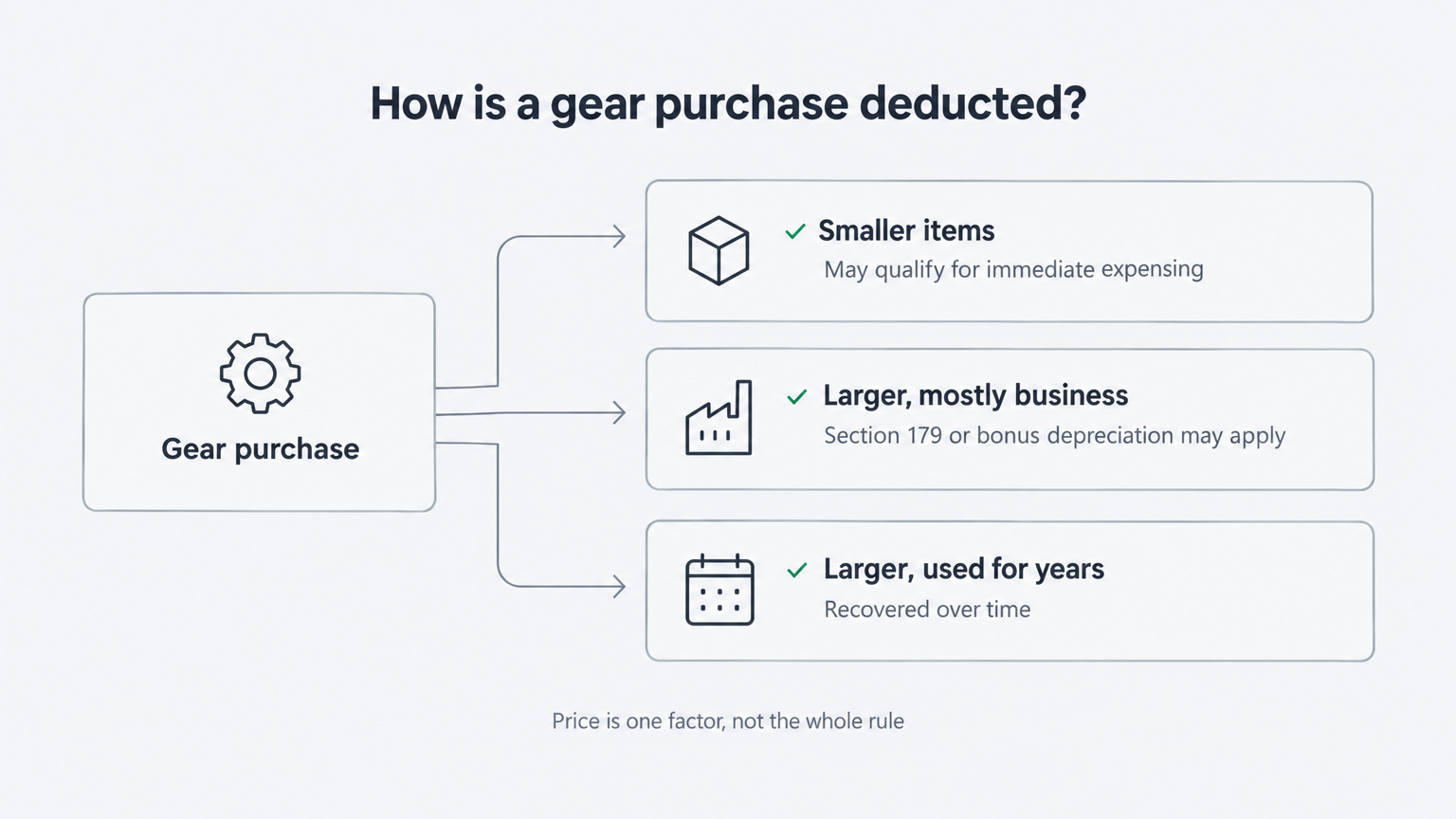
Smaller gear purchases may qualify for immediate expensing. Bigger purchases may qualify for Section 179 or bonus depreciation, or be deducted over time. Price matters, but it is not the only rule (IRS).
Work-related education can count when it maintains or improves skills in the work you already do (IRS).
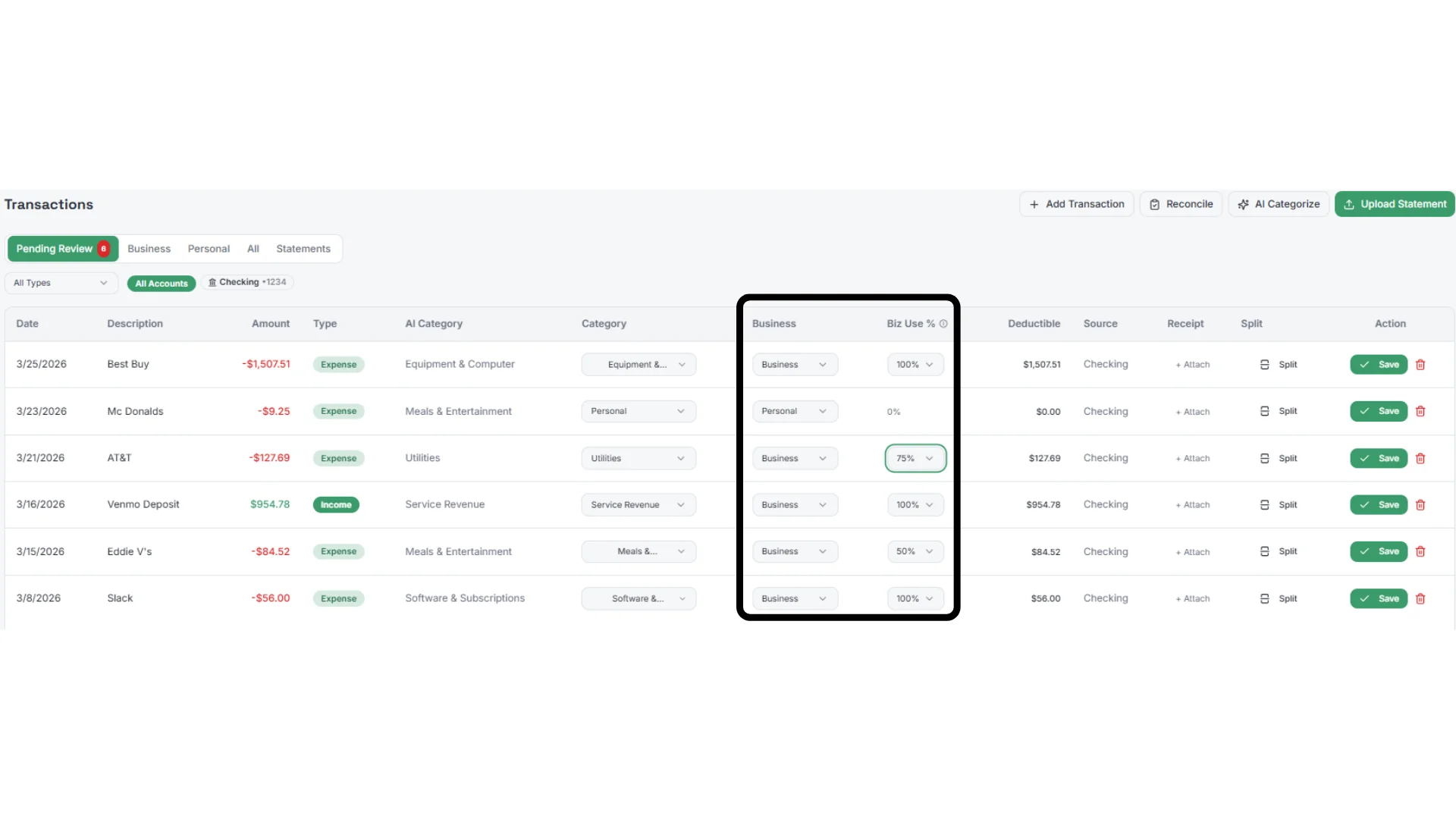
SnapTax keeps the business-use share and the receipts with each expense, and feeds them into a quarterly estimate.
Do your deductions actually change by profession?
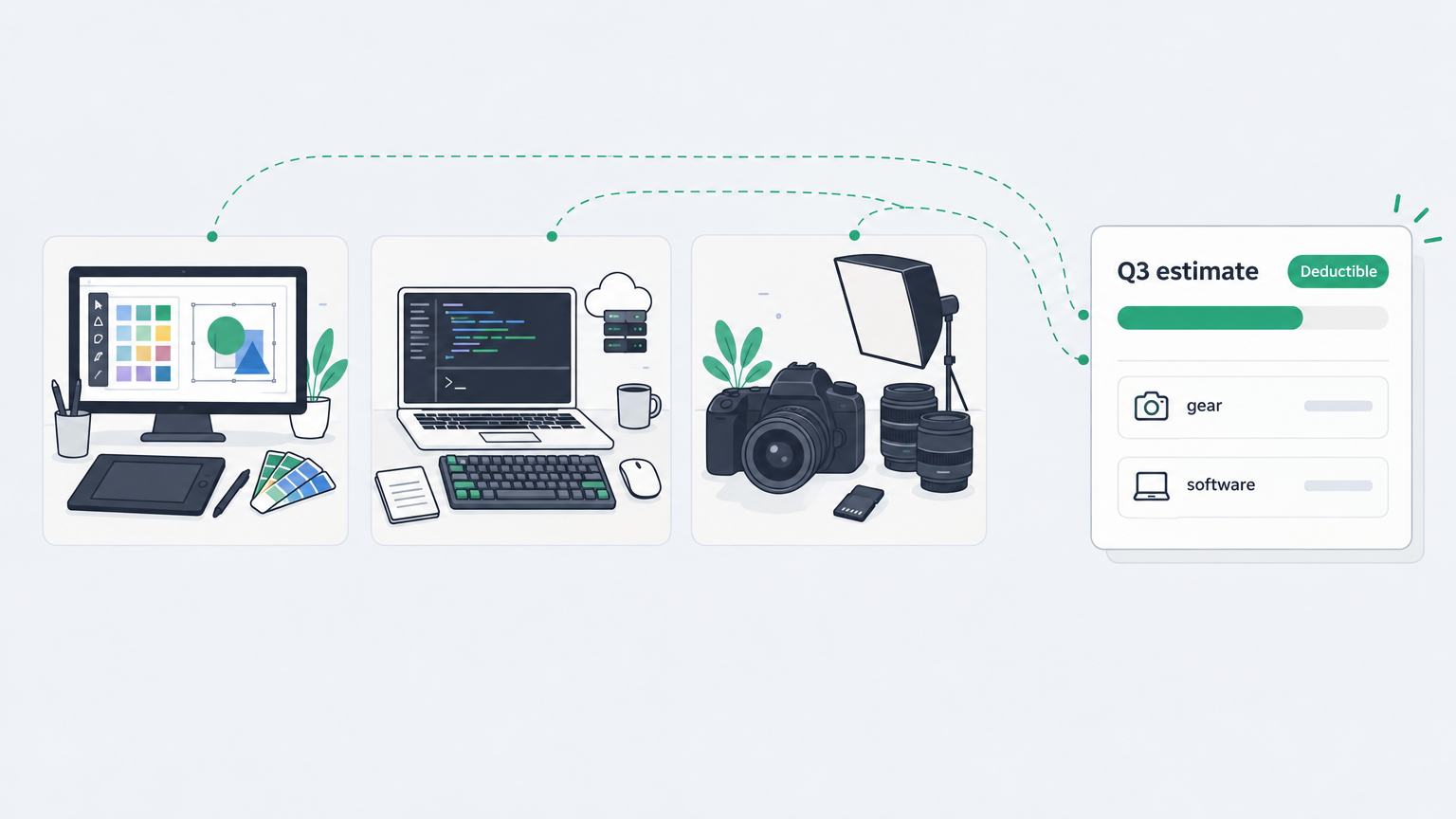
No. The test is the same whether you write code, shoot weddings, or design websites. What changes is which buckets are heavy for you: a designer may have a growing stack of subscriptions, a developer may juggle hosting and test devices, and a photographer may have more money tied up in equipment.
One condition comes first: the activity must be a business, not a hobby. The IRS states it plainly - "a business operates to make a profit" - and hobby expenses cannot create a deductible loss (IRS).
An expense is ordinary (common in your line of work) and necessary (helpful and appropriate for it) (IRS).
If an expense is partly personal, the personal part is not deductible (IRS).
What does each profession actually claim?
The rulebook is shared; the receipts are not.
Bucket | Designer | Developer | Photographer |
|---|---|---|---|
Gear | Monitor, drawing tablet, workstation | Laptop, second monitor, test devices | Camera bodies, lenses, lighting |
Software | Design suite, font and stock licenses | Hosting, domains, code tools | Editing suite, cloud backup, gallery hosting |
Workspace | Home studio, dedicated desk | Home office, coworking desk | Home studio, rented shoot space |
Education | Craft courses, conferences, dues | Framework training, conferences | Workshops, certifications, dues |
Two areas need a closer look: education must meet the work-related education rules, and a workspace inside your home must meet the home-office rules. A rented coworking desk or studio follows the business-rent rules instead.
How do you deduct gear, from a lens to a workstation?
Buying gear and putting it to work aren't always the same date. For depreciation and Section 179, the placed-in-service date matters - when the equipment is ready and available for business use.
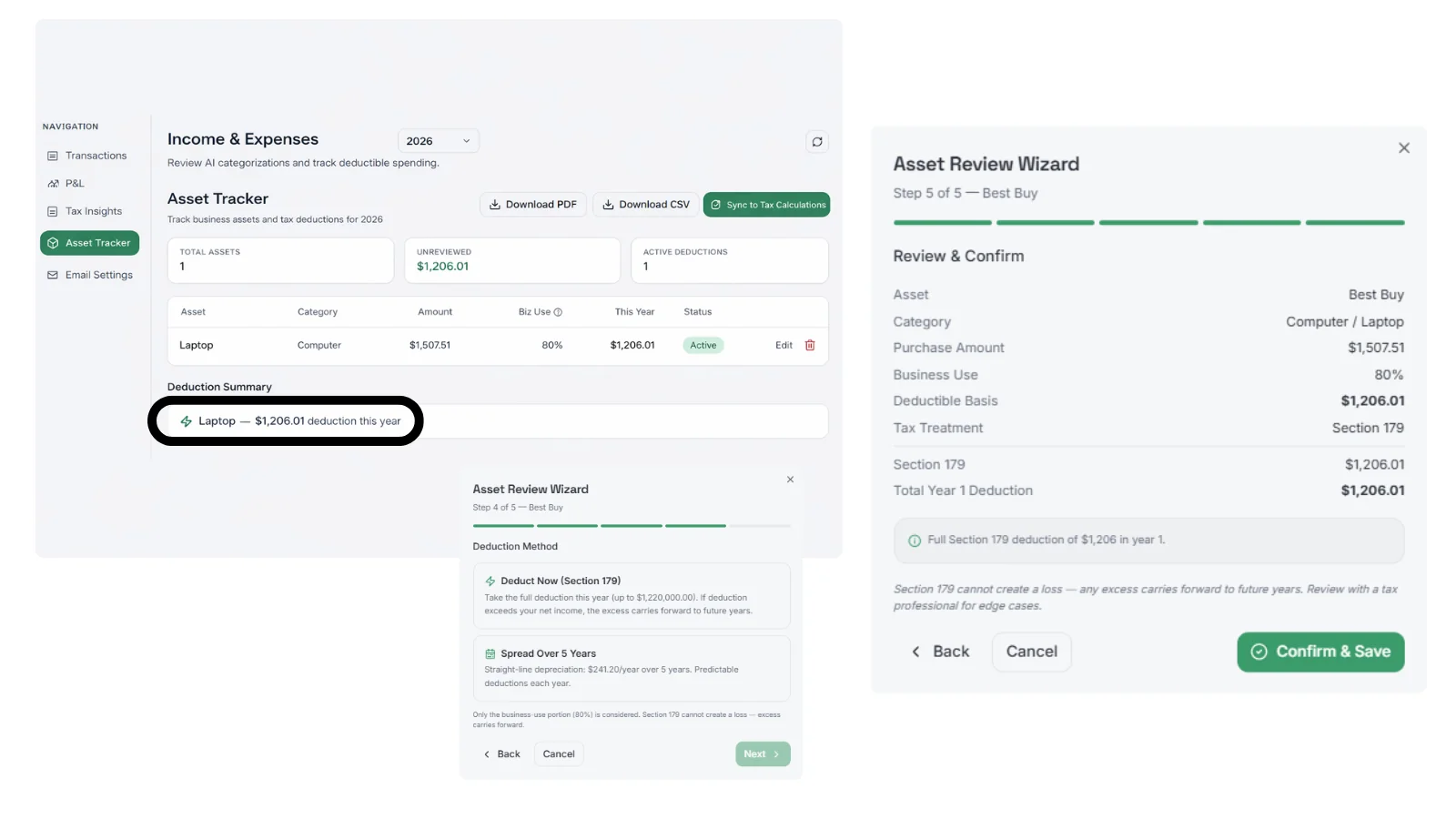
A $2,200 lens or a $1,500 laptop may qualify for immediate expensing under the de minimis safe harbor if you meet its requirements and make the election. A $6,000 camera body is not automatically a five-year write-off: Section 179 or bonus depreciation may allow a larger first-year deduction. Either way, only the eligible business portion counts.
Property that lasts more than a year generally cannot be fully deducted when placed in service, so you recover it over several years as depreciation (IRS).
The de minimis safe harbor can let you expense an item up to $2,500 per item or invoice (or $5,000 with an applicable financial statement), but it is an election with book and accounting-policy requirements (IRS).
Section 179 can let you deduct qualifying property sooner, but it must be used more than 50% for business, and a later drop to 50% or less puts part of the deduction back into income (IRS).
Are software and subscriptions deductible for freelancers?
Yes, when they serve the business. A design suite you renew monthly and hosting you pay to serve clients both count, and you deduct the eligible business share.
Ongoing subscriptions you pay for regularly are generally current expenses, while buying software outright or prepaying a longer contract can change when you deduct the cost (IRS).
If a tool serves both personal and business use, only the business portion is deductible (IRS).
Report the cost in the appropriate expense or asset category, based on what you purchased and how it is treated (IRS).
Can you deduct a home studio, a home office, or a coworking desk?
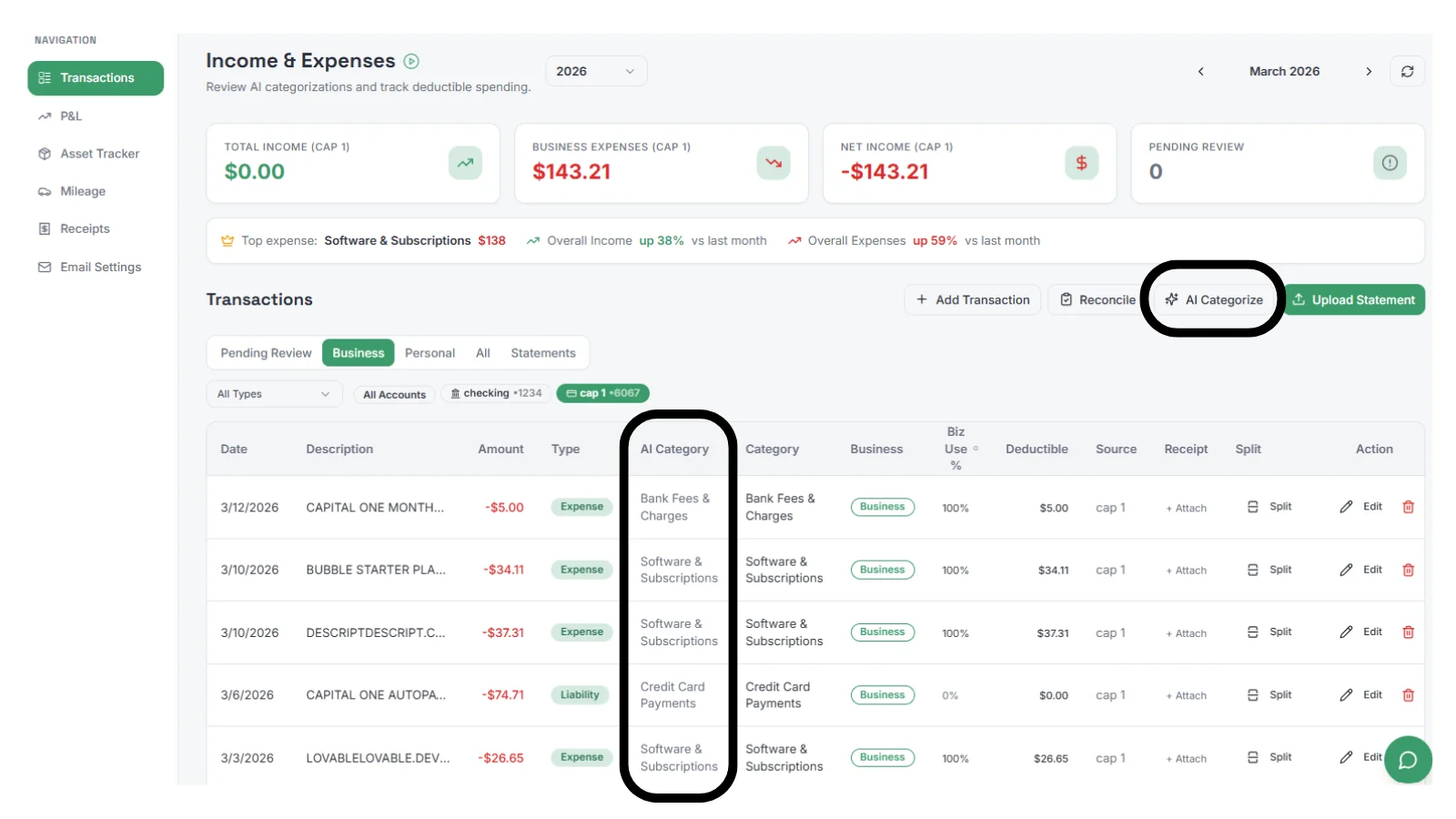
Yes, you do not need a separate room. A clearly identifiable corner can count if it is used regularly and exclusively for business and meets the other home-office rules. A desk that doubles as the family homework station is different.
You can deduct business use of your home if part of it is used exclusively and regularly as your principal place of business or to meet clients, and the space can be a separately identifiable area rather than a walled-off office (IRS).
Exclusive use is the strict part. The IRS example: an attorney whose den is also used by the family for recreation cannot deduct it (IRS).
A coworking desk or rented studio follows the business-rent rules, not the home-office square-footage test (IRS).
Method | How it works | Best when |
|---|---|---|
Simplified | $5 per square foot, area capped at 300 sq ft (IRS) | The space is small, or you would rather not track every home cost |
Actual expenses | Business percentage of real costs - e.g. a 240-sq-ft office in a 1,200-sq-ft home (IRS) | Home costs are high and the office takes a real share |
Is work-related education deductible for a freelancer?
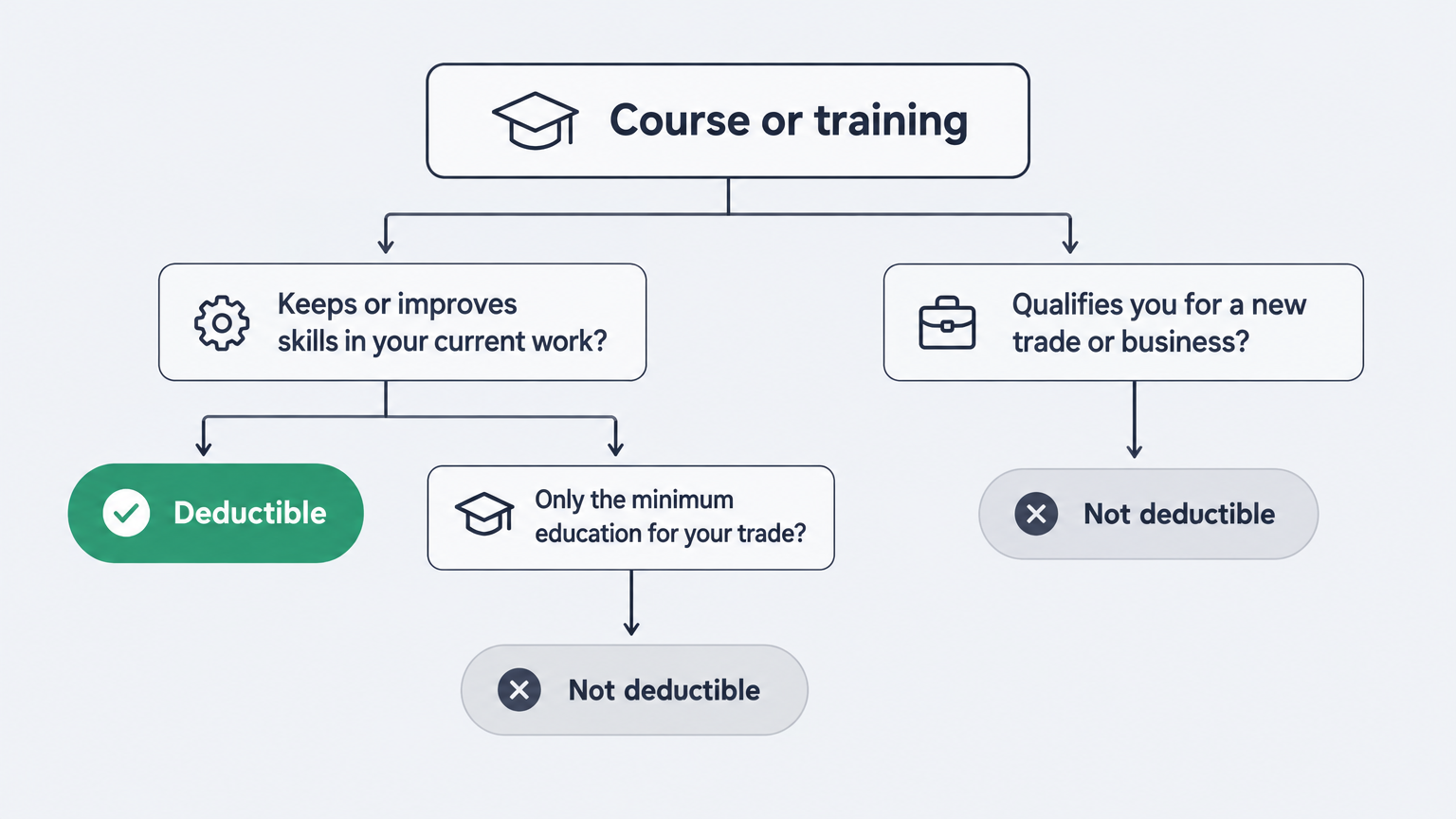
Yes, when the course keeps you current in the work you already do. The test has two parts, and a second rule can still disqualify the expense.
A designer's typography course, a developer's framework training, or a photographer's lighting workshop can qualify when it keeps you current in the work you already do. Training for a new profession follows a different rule.
The education must maintain or improve skills needed in your present work, or be required to keep your present job (IRS).
Even then it fails if it qualifies you for a new trade or business, or is the minimum education for your present trade (IRS).
You can deduct tuition, books, supplies, lab fees, certain travel, and research costs (IRS).
Can you deduct mileage to shoots and client sites?
Sometimes, and the destination alone does not settle it. Driving between business locations can count, but a drive from home to a client needs a closer look.
The 2026 business rate is split: 72.5 cents per mile from January 1 to June 30, and 76 cents per mile from July 1 to December 31 (IRS).
The standard rate is one of two methods; the other is actual expenses (IRS).
Your regular workplace, the temporary-work-location rules, and whether your home is your principal place of business can all affect a home-to-client drive (IRS), so check those before you claim it.
Your ordinary commute does not become deductible just because you are carrying a camera or a laptop. Keep a log with the date, the destination, the business purpose, and the miles driven, plus enough total-mileage information to support your business-use calculation (IRS).
How do you keep records that hold up?
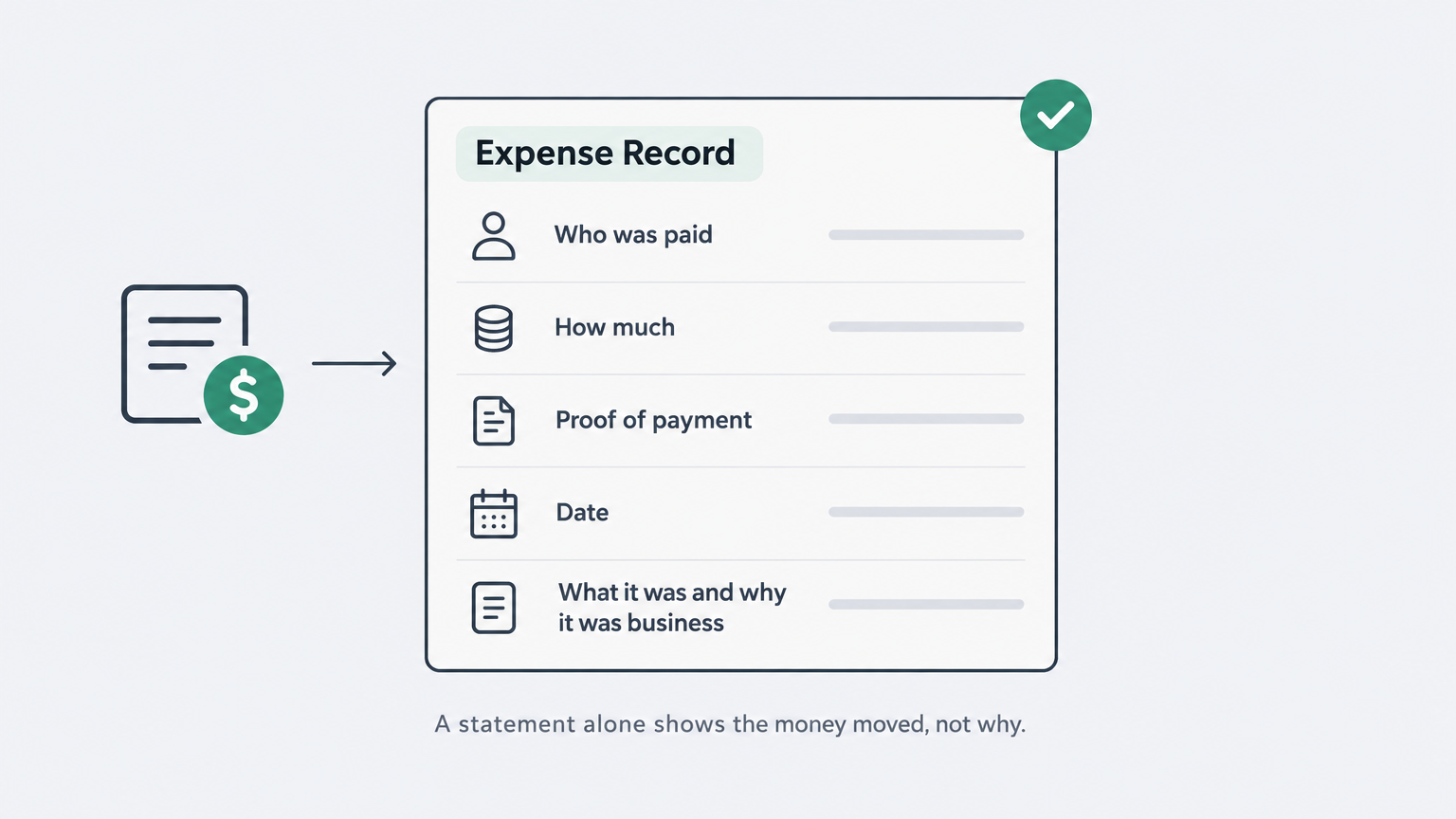
Keep a record for every expense that shows who was paid, how much, proof of payment, the date, and what the money bought.
Supporting documents should show the payee, the amount, proof of payment, the date, and the business purpose (IRS).
A canceled check or bank statement alone does not prove the business purpose, so keep the receipt alongside it (IRS).
For gear you recover over time, keep the purchase record, business-use history, and depreciation details while you own it, and through the retention period after you sell or dispose of it (IRS), since that history feeds the sale.
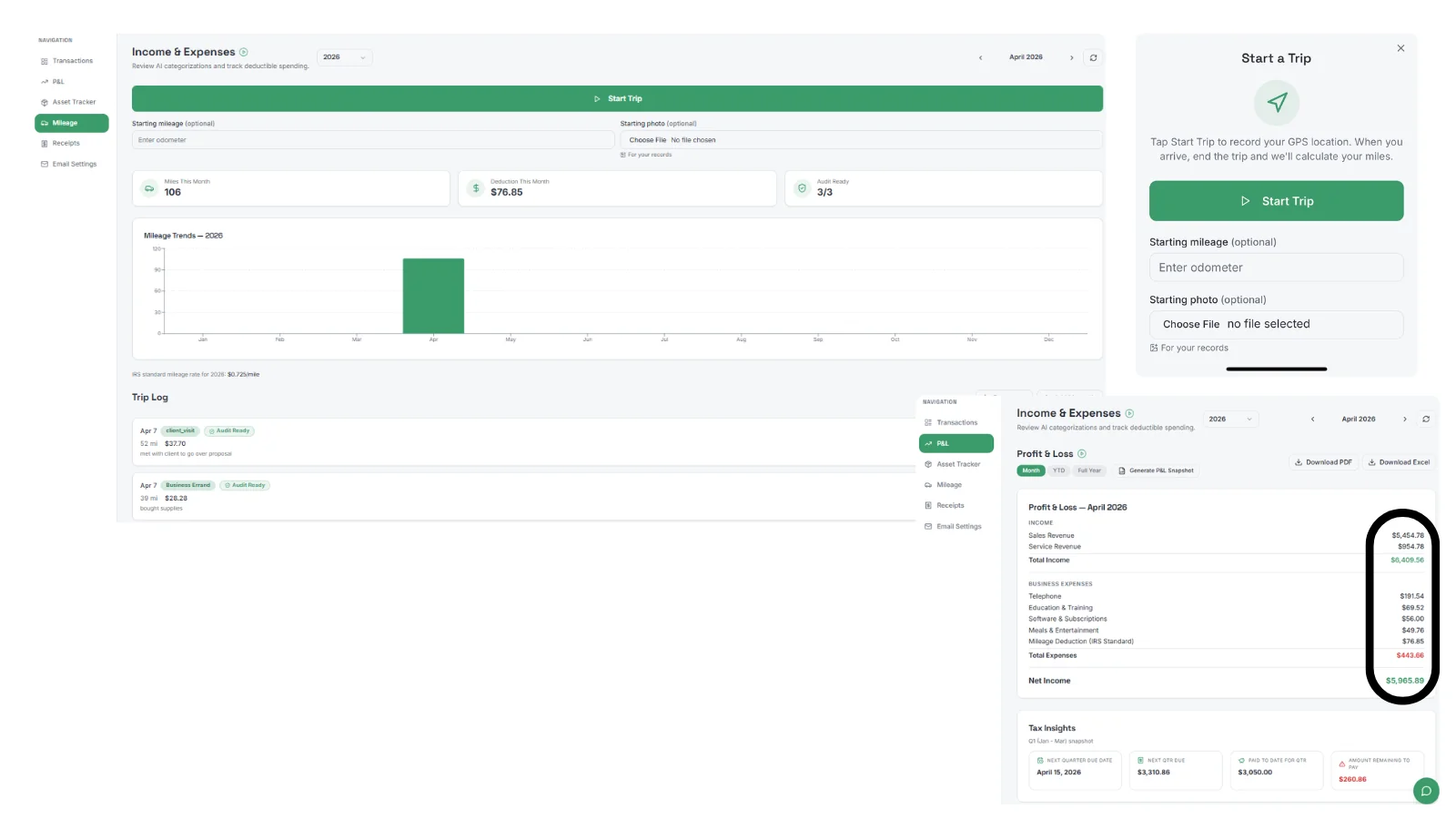
A photographer's season receipts, a developer's hosting invoices, and a designer's renewals all need the same few fields. SnapTax keeps each expense and its receipt together.
Ready to try SnapTax?
SnapTax is tax-planning software for freelancers and 1099 workers, built by a bookkeeper with more than two decades of experience (Inc.). The estimate updates as your income and expenses change, and the "Is This Deductible?" wizard helps you work through an expense in plain English, though you still review the facts and keep the proof (SnapTax). Start free for a basic quarterly-tax estimate, or take a 30-day trial of a paid plan with no contract, and cancel anytime (SnapTax).
Frequently Asked Questions
Do freelancer deductions change by profession?
No. The rule is the same for designers, developers, and photographers: an expense must be ordinary and necessary for the business, and only the business-use share is deductible. What differs is which expenses each profession actually has (IRS Publication 334).
How do I deduct a camera, laptop, or other gear?
You deduct gear when you place it in service, not simply when you pay for it. Smaller items may qualify for immediate expensing under the de minimis safe harbor, which allows up to $2,500 per item or invoice (or $5,000 with an applicable financial statement) if you meet its requirements and make the election. Larger purchases may qualify for Section 179 or bonus depreciation, or be recovered over several years as depreciation. Section 179 requires more than 50% business use, and a later drop to 50% or less puts part of the deduction back into income (IRS Publication 334).
Are software and subscriptions deductible for freelancers?
Yes, when the software serves the business. Ongoing subscriptions you pay for regularly are generally current expenses, while buying software outright or prepaying a longer contract can change when you deduct the cost. If a tool is used for both personal and business purposes, only the business portion is deductible. Report the cost in the appropriate expense or asset category based on what you purchased and how it is treated (IRS Publication 334).
Can I deduct a home office or home studio?
Yes, if you use part of your home regularly and exclusively for business, and you do not need a separate room: a clearly identifiable area can count. The simplified method is $5 per square foot with the area capped at 300 square feet, or you can deduct the business percentage of actual home costs. A coworking desk or rented studio follows the business-rent rules instead (IRS Publication 587).
Is work-related education deductible for a freelancer?
Yes, when the education maintains or improves skills needed in your present work or is required by law to keep your job. It is not deductible if it qualifies you for a new trade or business or is the minimum education for your present trade (IRS Topic no. 513).
What is the 2026 business mileage rate?
The 2026 rate is split across the year: 72.5 cents per mile from January 1 to June 30, and 76 cents per mile from July 1 to December 31 (IRS standard mileage rates).
What records do I need to keep for deductions?
Keep records that identify the payee, the amount, proof of payment, the date, and a description showing the business purpose. A canceled check or statement alone does not prove the business purpose, so keep the receipt or invoice as well. For gear you recover over time, keep the purchase record, business-use history, and depreciation details while you own it, and through the applicable retention period after you sell or dispose of it, because that history feeds the sale. Supporting records are generally kept for three years, but that window is not a signal to delete an active asset history (IRS, IRS Topic no. 305).
