Why Freelancers Overpay Taxes - and How to Know if It's Happening to You
Crystal Harrison · September 8, 2026 · 14 min read
Why Freelancers Overpay Taxes - and How to Know if It's Happening to You
Freelancers overpay taxes for two reasons: their estimate was based on a projection that stopped being accurate months ago, and deductions that require a calculation - not a receipt - never got claimed. Here's how to tell if either is happening to you.
September 8, 2026 · 9 min read

TL;DR
Freelancers can overpay taxes when their estimated payments are based on an outdated projection or when they overlook deductions that require eligibility analysis and calculation rather than a simple receipt. A refund can mean you paid more during the year than necessary; a missed valid deduction can increase the tax you ultimately owe. Common areas to review include estimated-tax projections, the QBI deduction, home-office method selection, vehicle-expense treatment, and available credits.
The practical fix is to revisit your estimate when income or other tax circumstances materially change, maintain documentation as you go, and compare the deductions and methods that apply to your facts. If your estimate still reflects a projection from early in the year, update it before the next estimated-tax payment deadline.
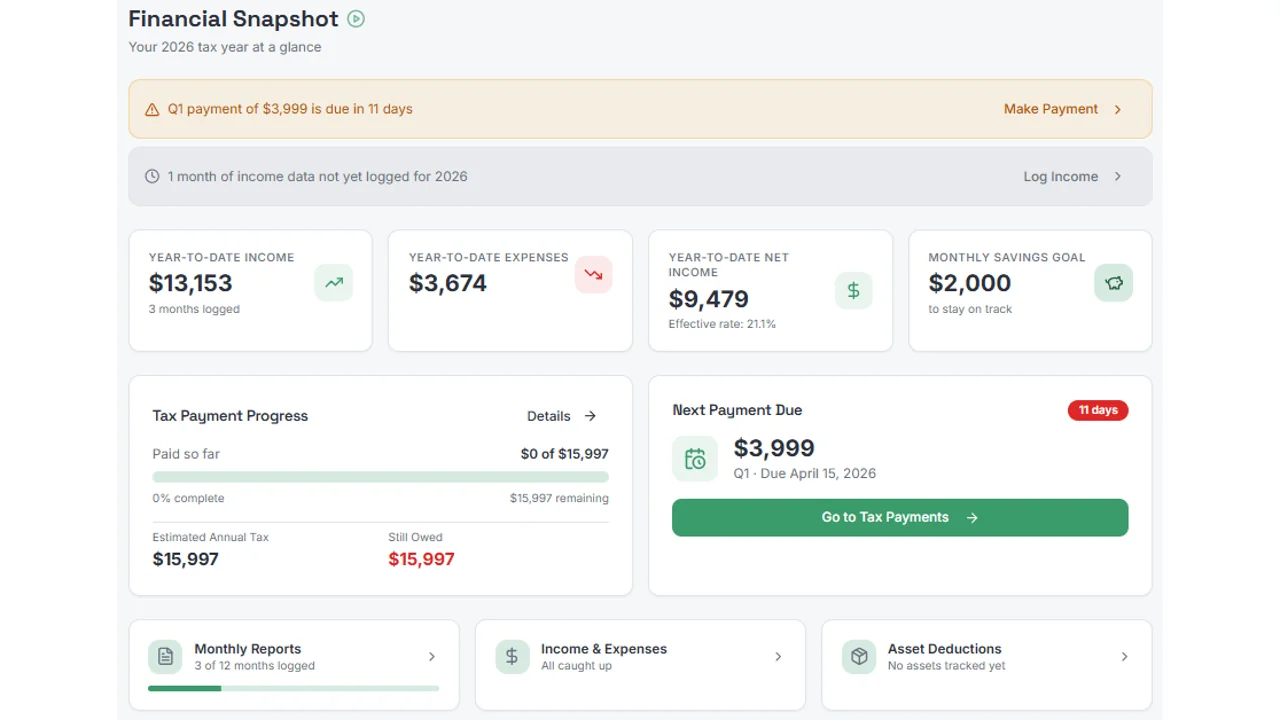
The problem with freelancer tax overpayment isn't that people are careless. It's that the tools they use are designed for a different problem. Filing software works backward from April. Expense trackers record what you spent. Neither one is built to answer the question that matters most during the year: what do I actually owe right now?
I also wrote about this for Finance Monthly's Tax section - the full piece covers the broader landscape of how year-round tax planning tools are evolving. This post goes deeper on the specific question of why freelancers overpay, and how to tell if it's happening in your situation.
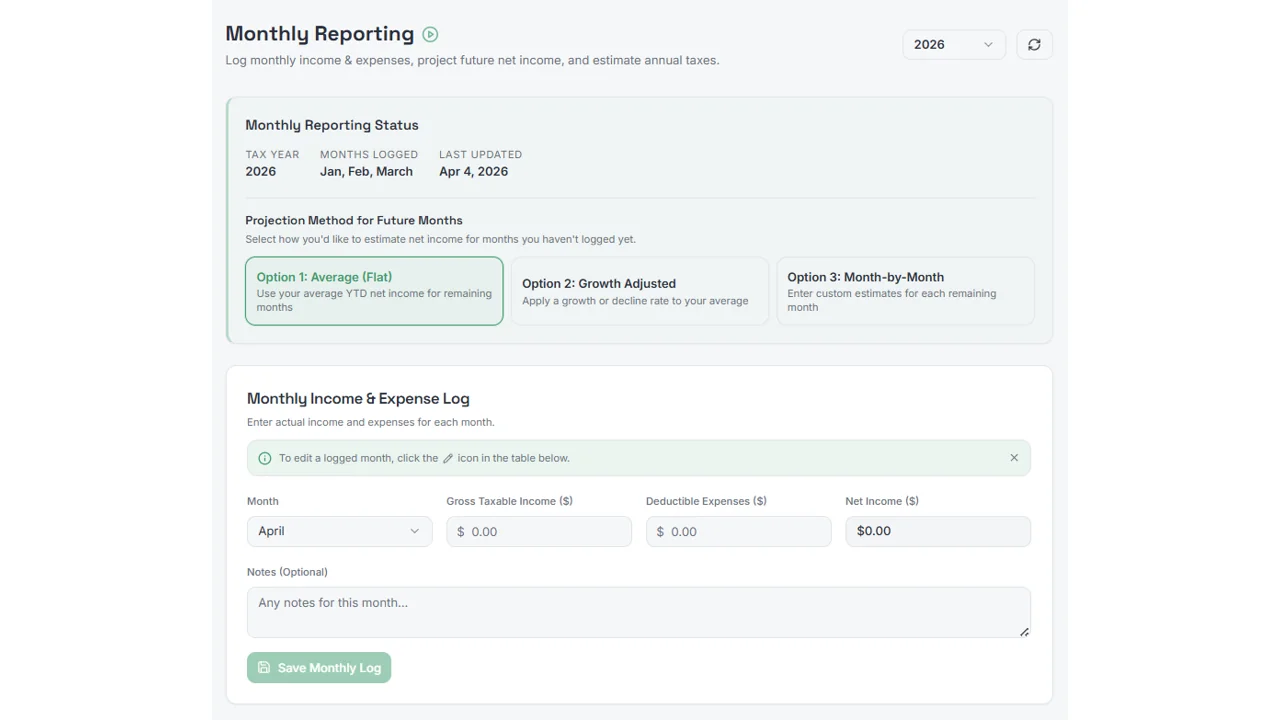
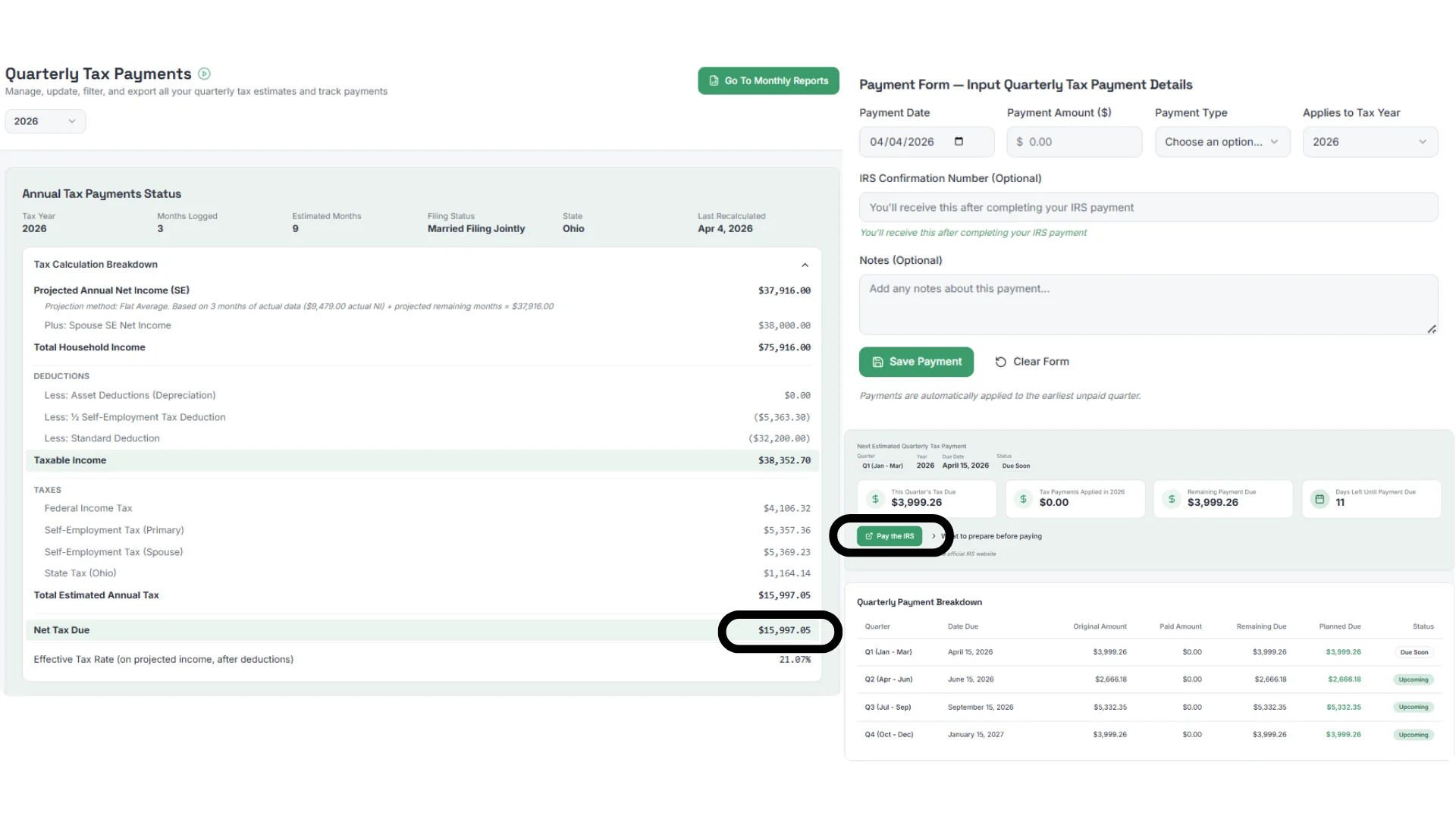
SnapTax was built around this specific problem - a quarterly tax estimate that updates every month as your income and expenses change, connected to the deductions and documentation that filing software finds in April but should have been in your books all year.
What does it actually mean to overpay taxes as a freelancer?
Overpaying taxes as a freelancer usually means one of two things - making quarterly payments larger than required, or claiming fewer deductions than you're entitled to, or both.
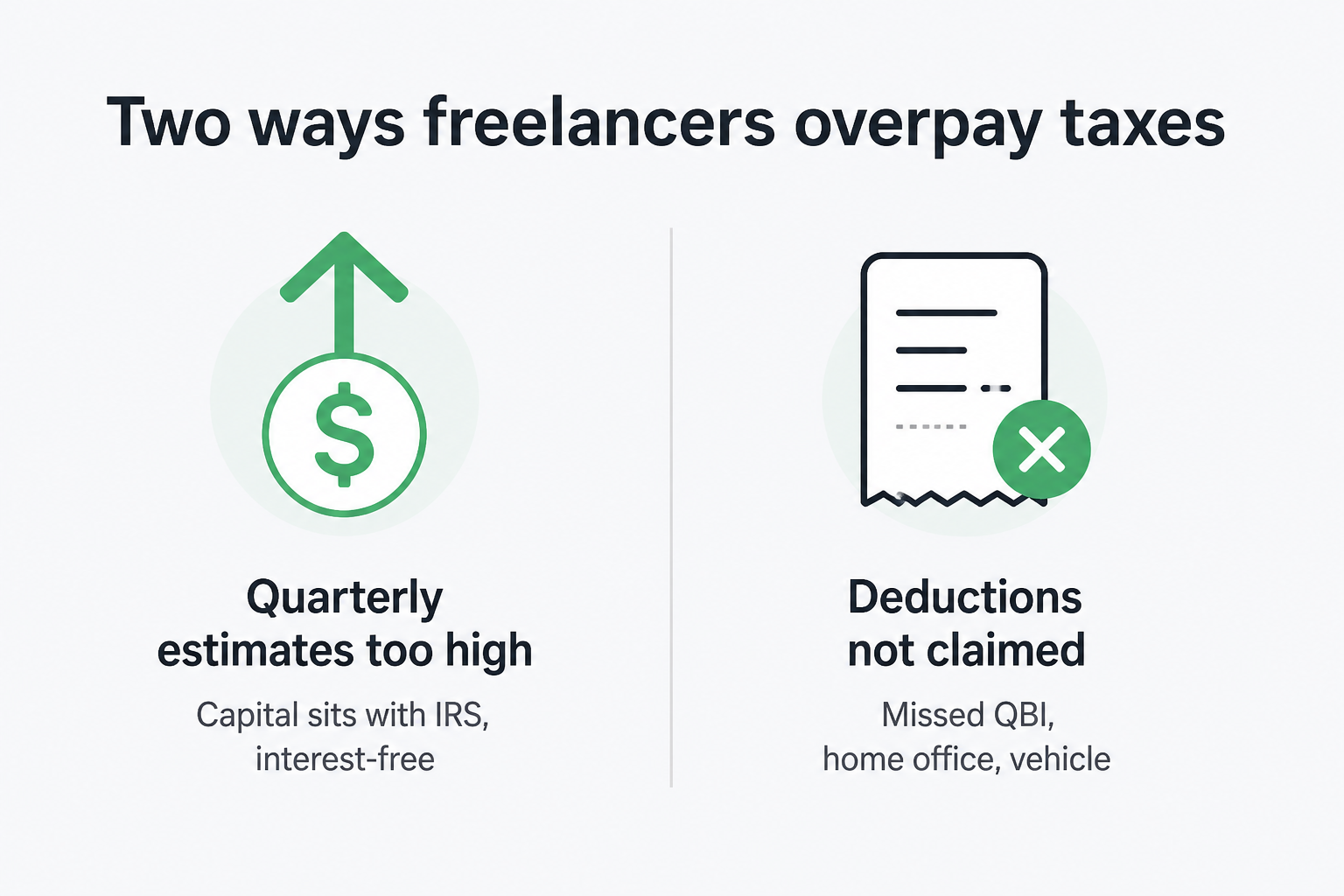
- Many freelancers overlook deductions that require separate eligibility analysis and calculations, rather than appearing automatically in an expense tracker. Calculation-based deductions are easier to miss because they do not appear as a single transaction in a bank feed.
- Overpaying quarterly is not penalized, but it does tie up working capital that could otherwise be used in the business until a refund is issued.
- A missed deduction can often be corrected by filing an amended return (Form 1040-X), generally within the applicable refund-claim deadline - commonly three years after filing or two years after payment, whichever is later. Confirm your specific deadline with a tax professional.
The first problem - overpaying quarterly - is mostly a cash flow issue. The second - underclaiming deductions - directly increases your tax bill for that year, though a missed deduction can often be corrected by filing an amended return within the applicable deadline.
Why do quarterly estimates go wrong for freelancers?
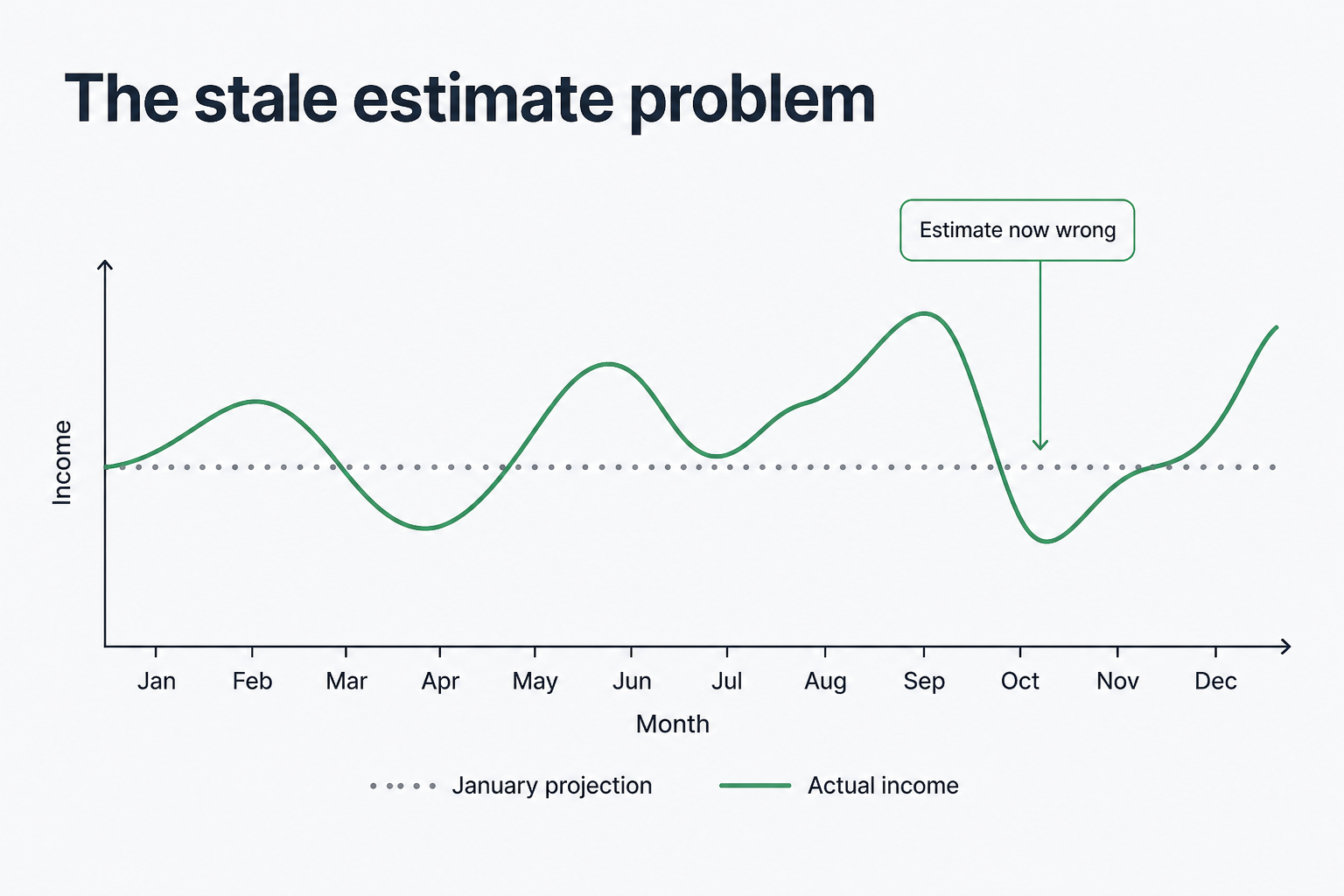
Quarterly estimates can go wrong when a freelancer calculates an annual tax projection early in the year and does not revise it as income, deductions, withholding, or other tax circumstances change.
- Estimated taxes operate on a pay-as-you-go system. The IRS sets quarterly deadlines on April 15, June 15, September 15, and January 15. Taxpayers can generally calculate installments using a regular method, an applicable safe harbor, or - when income is uneven - the annualized-income installment method. IRS Publication 505 explains all three approaches.
- A freelancer who earns $4,000 in one month and $14,000 the next has a meaningfully different quarterly liability than one who projected flat income. A one-time calculation in January doesn't capture that difference.
- The annualized-income installment method exists specifically for freelancers with uneven income. It can help align installments with income earned during each period. But it requires period-by-period tracking data and is reconciled through Form 2210 with the return.
Many freelancers do not use the annualized-income installment method because it requires period-by-period income and deduction data and additional calculations. Without that data, an estimate set at the start of the year can remain unchanged through four payment deadlines. If income was lower than projected, payments may exceed what was needed; if higher, an underpayment penalty may apply. A static estimate can become inaccurate as income, deductions, withholding, filing status, or other tax circumstances change.
Which deductions do freelancers most commonly miss - and why?
Frequently overlooked tax opportunities include ones that require a calculation rather than a receipt - the QBI deduction, home-office method selection, vehicle-expense method comparison, and potentially available family-related credits.
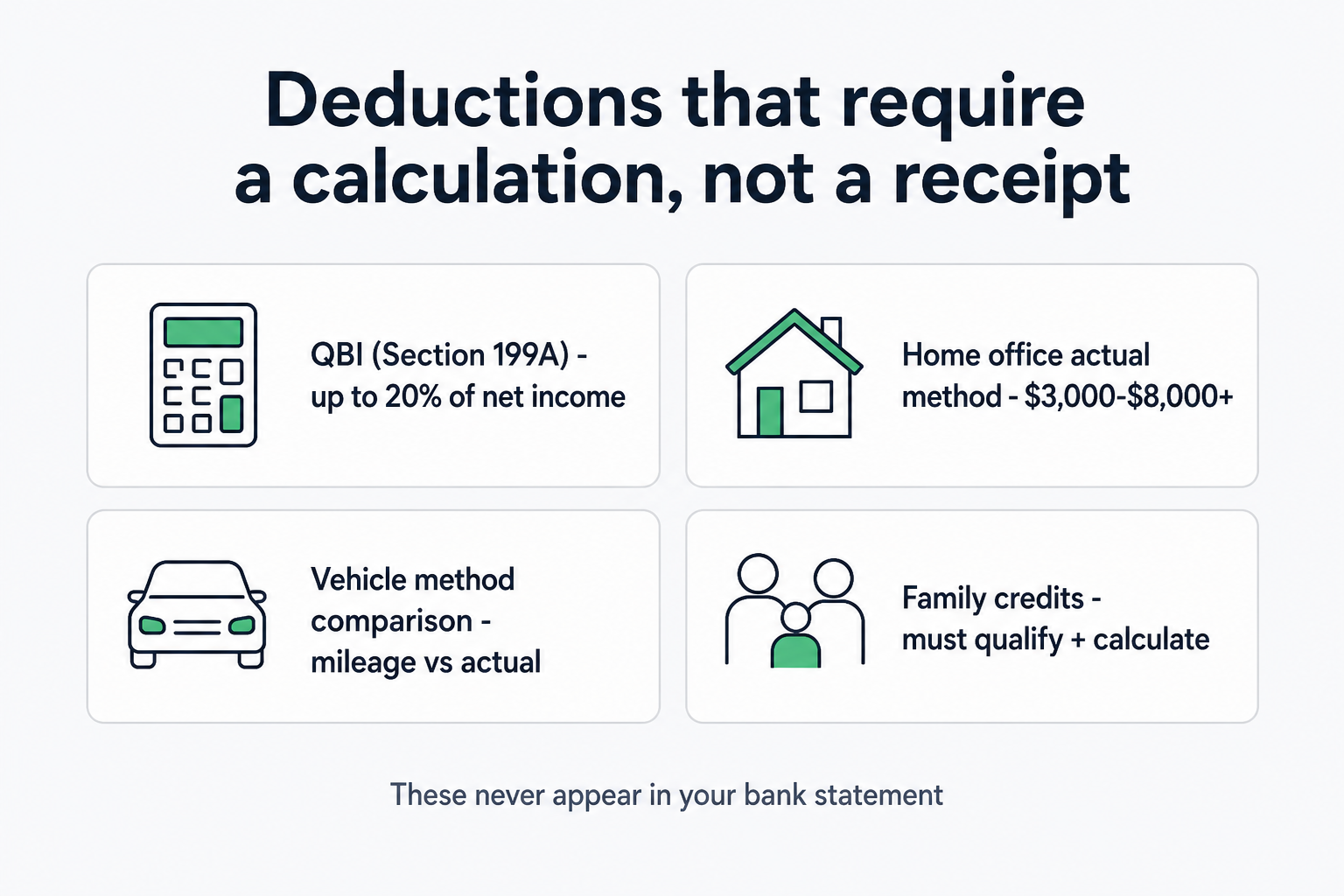
These are the deductions that don't show up when you scroll through your bank statement:
- QBI deduction (Section 199A) - may allow eligible taxpayers to deduct up to 20% of qualified business income. The actual result depends on taxable income, the type of business, and other limitations. For example, a taxpayer with $65,000 of qualifying QBI could have a preliminary deduction of up to $13,000 before applying those other limitations - but the deduction is not available in every case. IRS guidance on the Qualified Business Income deduction.
- Home-office method selection - for eligible taxpayers with substantial home expenses, the actual-expense method can produce a larger deduction than the $1,500 simplified-method cap. The result depends on square footage, housing costs, utilities, business-use percentage, and other facts. IRS Publication 587 explains both methods and the eligibility rules that apply to either.
- Vehicle-expense method comparison - the gap between standard mileage and actual expenses can vary by thousands of dollars depending on the vehicle and usage. Method selection has lasting consequences - see the table below. IRS Publication 463.
- Family-related credits - credits like the Child Tax Credit and dependent care credit phase in and out depending on income. Freelancers with variable income may qualify in some years and not others, and some miss the recalculation entirely.
For home office specifically, the difference between methods is significant enough that it's worth looking at both:
| Method | Potential deduction | How it's calculated |
|---|---|---|
| Simplified | Up to $1,500/year | $5 per square foot, up to 300 sq ft |
| Actual expenses | Varies | Eligible share of qualifying home expenses, based on business-use percentage |
The actual-expense method may be larger for eligible taxpayers with substantial home expenses, but it requires more recordkeeping and, for homeowners, may involve depreciation considerations. Both methods should be compared rather than assuming one will win. A tax professional can help homeowners understand the depreciation implications before choosing.
For vehicle deductions, the year-one decision has lasting consequences:
| Method | Based on | Switching rules |
|---|---|---|
| Standard mileage | IRS rate × miles driven | Must generally be chosen in year one for an owned vehicle; can switch to actual expenses in a later year, with depreciation restrictions |
| Actual expenses | Gas + insurance + maintenance + depreciation | Starting here generally prevents a later switch to standard mileage |
For an owned vehicle, using the standard mileage rate in the first year generally preserves flexibility - you may be able to use either method in later years. Starting with actual expenses generally prevents a later switch to standard mileage. Leased vehicles have separate consistency rules. The gap between methods can be thousands of dollars over the vehicle's useful life, so the first-year decision is worth reviewing carefully.
How does documentation connect to deductions - and why do most tools miss this?
Documentation is part of tax compliance, not an afterthought. Different deductions carry different substantiation rules - and a deduction the IRS asks about, without adequate records to back it up, is a deduction that can be partially or fully disallowed.
- For expenses such as vehicle, travel, and meals, the IRS expects adequate records made at or near the time of the expense. IRS Publication 463 covers the specific substantiation requirements for these categories.
- Most expense-tracking apps record the transaction but not the business purpose. That means the deduction may be in the books but not substantiated if the IRS asks.
- The Finance Monthly article covers this in detail - SnapTax connects documentation to each deduction at the point of entry rather than as a separate year-end reconciliation step.
For vehicle deductions specifically, a contemporaneous mileage log is the strongest form of substantiation. A year-end reconstruction may be difficult to support and may not satisfy the adequate-records requirement if it isn't backed by reliable evidence from the time of each trip. For home-office, depreciation, and business-use allocations, taxpayers should retain records supporting eligibility, calculation, and business purpose throughout the year.
Here's what documentation looks like for several commonly reviewed deduction categories:
- Vehicle deductions - date, destination, business purpose, and miles for every business trip. The IRS expects these records to be kept at or near the time of travel.
- Home office - square footage calculation, actual expense receipts, and records establishing that the space is used exclusively and regularly for business.
- Short-term home rental (IRC §280A(g)) - documentation should support the business purpose, rental dates, fair-market rent, actual payment, and the applicable tax treatment. The rules are fact-specific; consult a tax professional before relying on this exclusion.
- Asset depreciation - purchase date, cost, business use percentage, and the method election (Section 179 vs bonus vs MACRS).
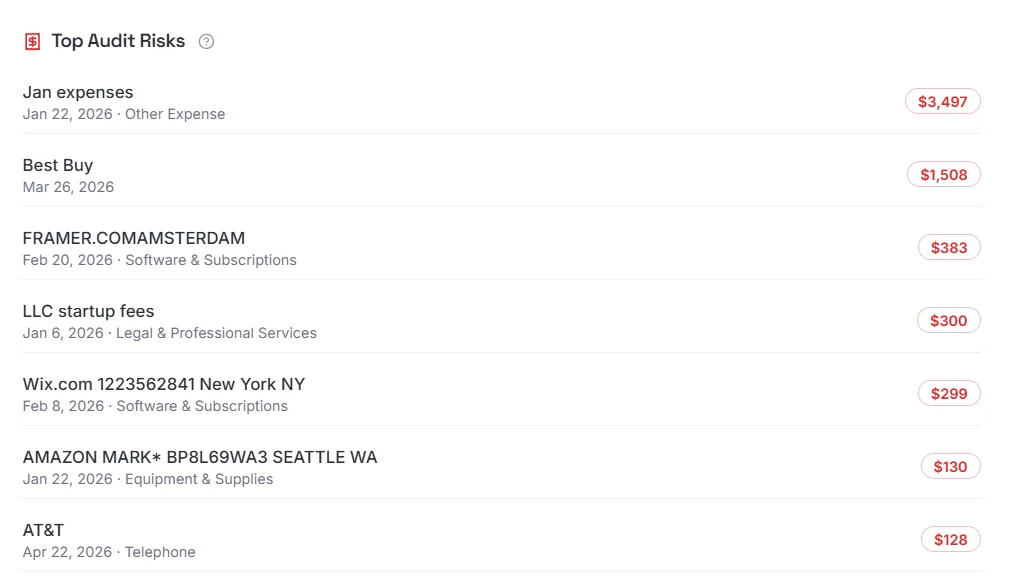
That last screenshot is what SnapTax's Receipt Reporting feature surfaces - transactions with incomplete or missing supporting information, ranked so users can prioritize what to address before filing. Year-round documentation gives you more time to correct gaps before filing season.
How do you know if you're overpaying right now?
Your estimate may no longer be reliable if it doesn't reflect meaningful changes in income, expenses, withholding, filing status, credits, or deductions since you last calculated it.
- Many freelancers have income that varies by month, client, season, or project. A static annual projection becomes less accurate with every month that passes without an update.
- If you've never claimed QBI, home office actual method, or vehicle deduction comparison - and you potentially qualify for any of them - you're likely leaving deductions unclaimed.
- A quarterly estimate that reflects actual year-to-date income and confirmed deductions is one practical way to assess whether your payments are on track. Comparing your expected annual liability against an applicable safe harbor - such as 100% of last year's tax or 90% of this year's - is another.
A quick self-check:
- When did you last recalculate your quarterly estimate? Revisit it whenever your income or tax circumstances materially change, and at least before each upcoming deadline.
- Did you claim QBI last year? If you had net business income and aren't sure whether you claimed it, it's worth checking eligibility - the calculation happens on your return, not from a receipt.
- Did you compare home office methods? The simplified method is easier to calculate. Depending on your specific expenses, the actual-expense method may or may not be larger - both should be compared.
- Did you log business mileage with a date, destination, and purpose for every trip? Without contemporaneous records, that deduction may be difficult to substantiate.
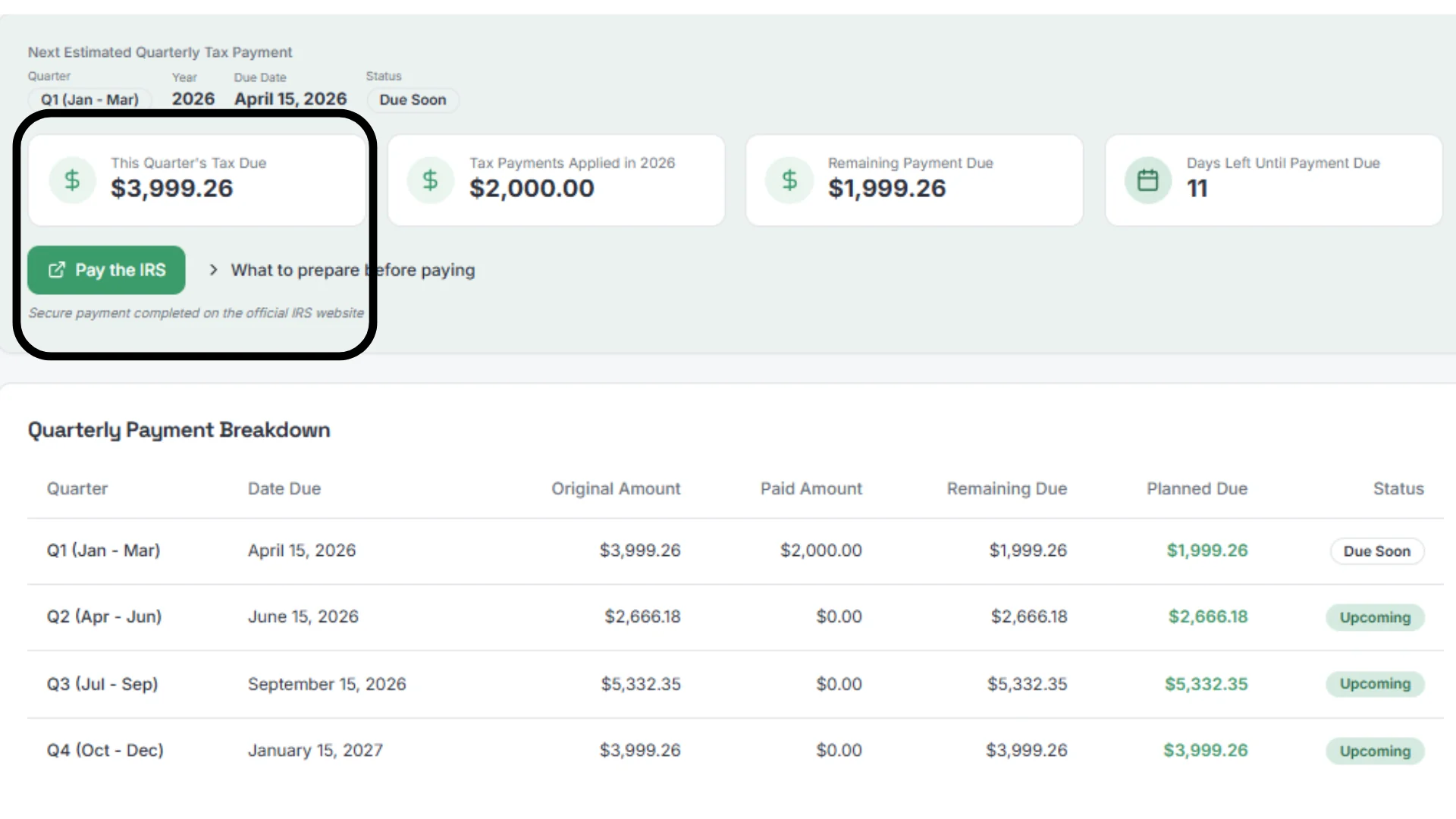
SnapTax's free tier gives you a quarterly tax estimate based on your income and filing situation - recalculated using the income, expenses, and tax information currently recorded in your account. The Optimizer tier's Deduction Wizard walks through potential deductions based on the information you enter, so you can see what may apply to your situation before filing season. Start free at snaptaxapp.com - no credit card required.
SnapTax provides educational tax-planning estimates and recordkeeping tools. It does not provide legal, tax, or accounting advice, and estimates depend on the accuracy and completeness of information you enter. Consult a qualified tax professional for advice about your specific situation.
Try SnapTax
SnapTax was built specifically for the problem this post describes - the gap between what freelancers owe and what they actually pay.
The Starter plan gives you a quarterly tax estimate, updated as your income changes. The Optimizer plan adds the Deduction Wizard - which surfaces potential deductions based on the information you enter and connects each one to the documentation requirements that apply.
Many users find it useful for identifying deduction questions worth reviewing before filing season. That's usually where the conversation about overpayment starts getting concrete.
SnapTax provides educational tax-planning estimates and recordkeeping tools, not legal, tax, or accounting advice. Consult a qualified tax professional for advice about your specific situation.
Start free - no credit card required
Overpaying taxes as a freelancer is more common than most people realize - and more avoidable than April makes it feel. The issue isn't tax season. It's the eleven months before it where the decisions that determine your bill actually happen.
The Finance Monthly article covers the broader picture of how tax planning tools are evolving for the 1099 workforce. Read it there.
And if you want to see your own number right now - SnapTax is free to start at snaptaxapp.com.
Frequently Asked Questions
Why do freelancers overpay taxes more than employees?
Unlike employees whose taxes are generally withheld from each paycheck, freelancers are often responsible for estimating and paying their own tax during the year. If their estimates are not updated as circumstances change, payments can drift away from their actual liability. That gap between projection and reality is where overpayment happens. Learn how quarterly estimates work for freelancers.
How much does the QBI deduction actually save a freelancer?
The Qualified Business Income deduction (Section 199A) may allow eligible taxpayers to deduct up to 20% of qualified business income, subject to taxable-income limits and other restrictions. The actual result depends on taxable income, the type of business, and other limitations - it is not available in every case. Higher-income taxpayers may face additional limitations based on W-2 wages paid, qualified property, or - for specified service trades or businesses - a complete phase-out above the applicable income threshold. For example, a taxpayer with $65,000 of qualifying QBI could have a preliminary deduction of up to $13,000 before applying those other limitations. The deduction never appears in a bank statement and requires a separate calculation. SnapTax's Deduction Wizard can help you identify whether this deduction may apply to your situation.
What is the annualized income installment method for quarterly taxes?
The annualized income installment method (IRS Form 2210, Schedule AI) lets taxpayers with uneven income calculate each quarterly payment based on income earned through IRS-defined annualization periods during the year - rather than assuming a flat share of an annual projection applies to each payment deadline. The method uses specific periods defined by the IRS rather than calendar quarters, and the calculation is reconciled with the annual return. It can reduce or eliminate underpayment penalties when income is concentrated in certain parts of the year.
Can I fix a stale quarterly estimate mid-year?
Yes - you can recalculate and adjust any remaining quarterly payment. The IRS doesn't penalize you for paying more than required in Q1 if you correct course in Q2 or Q3. The key is having current income and expense data to work from. SnapTax recalculates your estimate using the income, expenses, and tax information currently recorded in your account, so you always have a current number to work from.
Can I recover a missed deduction after I've already filed?
A missed deduction can often be corrected by filing an amended return (Form 1040-X), generally within the applicable refund-claim deadline - commonly three years after filing or two years after payment, whichever is later. Special rules sometimes apply. Amending a return takes time and often involves a CPA, which is why identifying missed deductions during the year is more practical than catching them after filing. See common freelancer deductions worth reviewing. Confirm your specific deadline with a tax professional.
